
Subscribe to our newsletter and enjoy exclusive updates, news, and offers.
Pool Water Disinfection
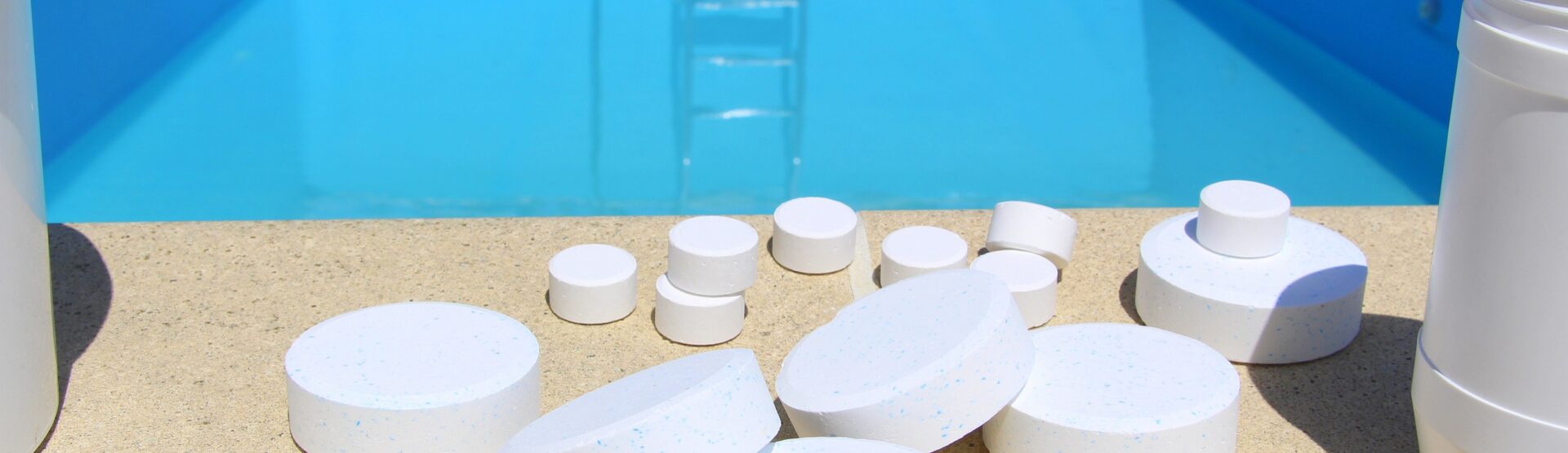
There are many methods for disinfecting pool water. Below, we summarize the main methods, their advantages and disadvantages, and Piscinity’s position. The effectiveness of water disinfection depends on water hardness and pH. Therefore, the first step is always to check and adjust the pH.
(If using water from an artesian well, it is recommended to provide a recent water sample for analysis to ensure suitability.)
pH Adjustment
The ideal pool water pH is between 7.2 and 7.6, with 7.4 being optimal. This is because:
- Human blood pH is 7.4.
- Most disinfectants lose effectiveness at pH above 7.8 (e.g., chlorine is only 20% effective above pH 7.8).
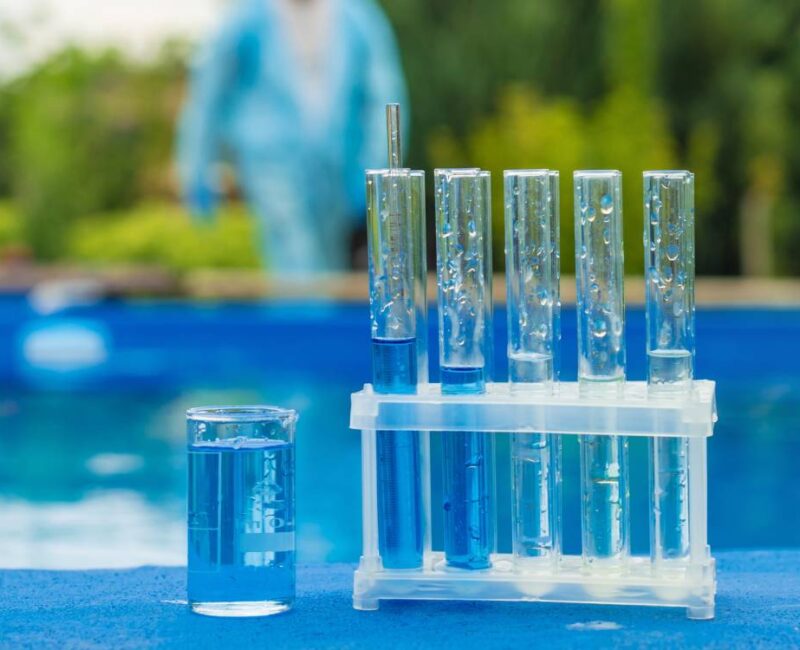
To adjust pH, we use pH minus (pH–) to lower it and pH plus (pH+) to raise it.
Note on chemical addition:
For pools built with Piscinity technology, chemicals should not be added undiluted directly into the pool, as they can stain the membrane. The correct method is to add chemicals to the equipment basket or dissolve them in a bucket of warm water before dispersing around the pool.
Water Hardness
High water hardness combined with high pH can lead to scale formation on pool surfaces. To minimize scaling, maintain pH around 7.2. For scale-free water, a water softener is recommended.
Water Disinfection
Pathogenic microorganisms thrive under certain conditions, such as neutral pH, presence of organic matter, and nutrients like nitrogen and phosphorus. Because of their small size, microorganisms are difficult to remove completely through physical or chemical processes like sedimentation and filtration. Therefore, disinfection is essential to protect swimmers’ health.
Disinfection is the process of destroying or inactivating pathogenic microorganisms to ensure the water is safe for human use.
A critical factor is the ability of the disinfectant to maintain a residual concentration in the circulation system to continuously protect public health.
Common Disinfection Methods
- Chlorine
- Bromine
- Electrolysis
- Ozonation
- UV Chamber
- Active Oxygen
- Ionization
The most widely used and effective disinfectant. Chlorine eliminates bacteria, viruses, and other pathogens in pool water. It is available in solid, gaseous, or liquid form
- Solid chlorine: Tablets (200 g), granules, and quick-dissolving “shock” chlorine. Used for routine or preventive treatment.
- Gaseous/liquid chlorine: Rarely used due to safety concerns.
Chlorine drawbacks:
- Reacts with amines (from saliva, urine, sweat) forming chloramines, causing odor and reducing effectiveness. Only superchlorination (shock) can break the bond.
- In indoor pools without proper ventilation, chlorine can cause respiratory discomfort.
- Direct contact with membranes can cause discoloration or permanent stains.
With correct pH management, chlorine levels in pool water can be lower than in tap water.
Usually supplied in slow-dissolving tablets. Advantages:
- Remains active at pH above 7.8.
- Reacts less with organic compounds, leaving more free disinfectant.
- Amines remain active, enhancing disinfectant capacity.
Notes:
- Often used in combination with chlorine (1/3 chlorine, 2/3 bromine), especially in indoor pools, small pools, or spas.
- Bromine is more expensive than chlorine.
Generates chlorine from salt. Advantages:
- Produces chlorine without unwanted residues.
- Lower operational costs.
- Easy installation: salt is added to the pool, water passes through an electrolysis cell, and chlorine is generated on-site.
Notes:
- Not suitable below 15°C.
- Chlorine produced is milder than industrial chlorine, leaving skin feeling softer.
- Systems are increasingly popular due to lower electrode costs and easier maintenance.
Ozonation (O₃)
Ozone is as powerful as chlorine against bacteria and pathogens. It is injected into pool water via a special chamber and released after passing through activated carbon.
Advantages:
- No consumables needed (ozone produced from air).
Disadvantages:
- Equipment is expensive.
- No residual effect, so chlorine is still required.
- Requires constant power supply and careful maintenance.
UV radiation neutralizes bacteria, viruses, and protozoa. Water passes through a UV chamber, which inactivates microorganisms by damaging their genetic material.
Notes:
- Cannot be used as the sole disinfectant; must be combined with chlorine or bromine.
- Reduces chloramine content, improving disinfection.
- Requires proper water circulation and flow rate.
Also known as hydrogen peroxide. Can replace chlorine in some applications.
- Liquid dosage: 250 ml per 50 m³ of pool water.
- Powder form: used as shock treatment, 1 kg per 100 m³.
Disadvantages:
- Does not act on all bacteria (10% remain).
- Ineffective above 28°C water temperature.
- Not suitable for heavily used pools.
- Very sensitive to pH (must maintain 7.0–7.4).
- Requires careful maintenance and higher costs.
- Uses silver and copper ions to neutralize pathogens. Electrodes are 97% copper, 3% silver.
- Complementary to chlorine.
- Not recommended for membrane-lined pools (can cause permanent staining).
- Overdose can cause greenish skin or hair discoloration.